Why Your Phoenix Pool Grows a White Line at the Waterline
The white stripe at the waterline is calcium scale, and in the north valley it's close to a fact of pool ownership.
October 16, 2026 · 4 min read
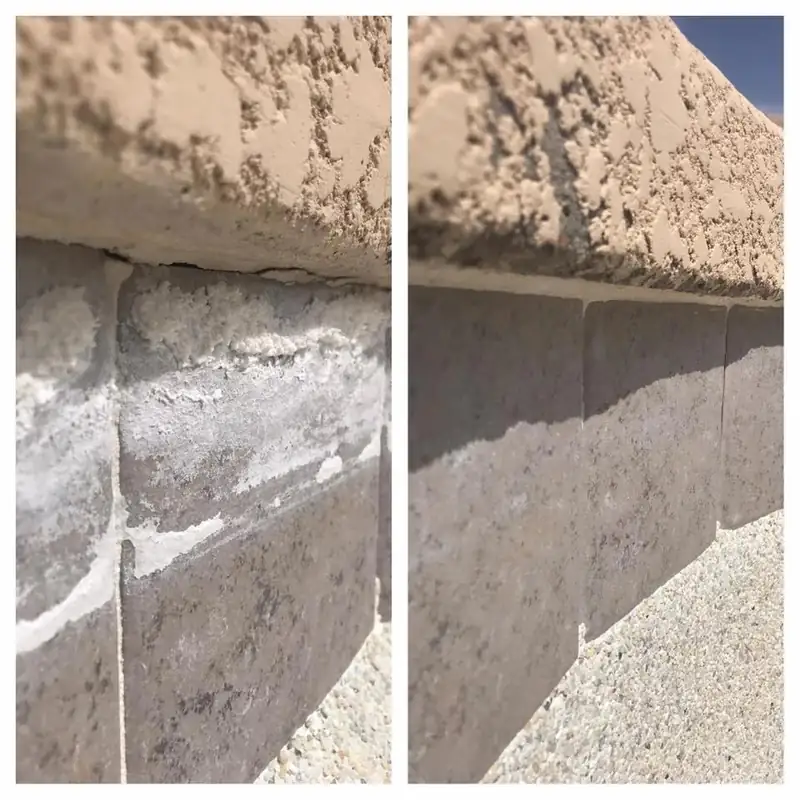
If you own a pool in Anthem, Peoria, Scottsdale or anywhere else in the north valley, you've probably seen it. A crusty white or grey band shows up at the waterline, right where the water meets the tile. It starts as a faint haze, then gets thicker, and one summer it's rough enough to feel with your fingernail. Scrubbing helps for a day and then the band is back. Here's what's going on and why it keeps happening.
What the white band actually is
That band is calcium. Phoenix tap water is naturally hard, which means it carries a lot of dissolved minerals, and calcium is the main one. When water sits against tile and slowly evaporates, the water leaves but the minerals stay behind. Over weeks and months those leftovers harden into a scale that bonds to the tile surface. It isn't dirt and it isn't algae, so a regular brush and a bucket of soapy water won't move it.
Because it forms right at the waterline, it draws a neat, hard-edged stripe across your tile. The line sits exactly where the water has been rising and falling, and in Arizona that spot gets plenty of action. The water level drops every day in the heat, and every top-up from the hose adds a fresh round of minerals to the mix.
Why Phoenix pools get it worse
Three things stack up here. The first is the water itself. Hard water is the starting condition, and it's close to inevitable that calcium buildup will show up on pool tile and other pool surfaces in the Phoenix area. The second is heat. Long, extreme summers speed up evaporation, and more evaporation means more minerals left on the tile every season. The third is topping up. Each time you add water to make up for what evaporated, you add more dissolved calcium, and the concentration in the pool slowly climbs.
pH plays a part too. When the pH of your pool water runs too high for a stretch, calcium comes out of the water more readily and deposits along the waterline. That's the one piece you control directly. A pool kept in balance deposits less, and a pool that drifts high for weeks gives the scale a head start. Balanced water won't make the problem disappear in the desert, but it can slow it down a lot.
The other kind: calcium bleeding through the grout
Some owners have a second pattern that looks similar but behaves differently. Instead of a clean stripe at the waterline, the white shows up between the tiles, along the grout lines, sometimes well below the water. That calcium can bleed through the grout from the underlying surface, the shell and bond coat the tile is set on. Water carries minerals through, and they crystallize where they come out.
This version can be cleaned, but it can't be stopped. Nothing you do with your water chemistry keeps minerals from moving through the structure behind the tile. If you've had grout lines cleaned and watched them whiten again a couple of years later, that's why. It's not a sign the cleaning failed. It's a pool that needs periodic treatment.
What helps and what doesn't
- Keep pH from running high for long stretches, since high pH is what pushes calcium out of the water and onto the waterline.
- Test your calcium hardness now and then so you know where your pool sits. We cover the target range in a separate article.
- Skip the pumice stone marathon. It can eat hours, and it's easy to scuff glazed tile while chasing a stubborn band.
- Skip the harsh chemicals too. Heavy scale that has been on the tile for years usually doesn't give way to them.
Light buildup is a different job than heavy buildup. A thin haze might respond to regular upkeep. A thick, crusty band that has been there for years has bonded to the surface, and that's where specialized equipment earns its keep.
How we remove it
We specialize in removing stubborn calcium deposits from the water line, grout, spillways, waterfalls, fountains and negative edge walls. We lower the water about 6 to 8 inches so the staining is fully exposed, choose a blasting media to suit your surface, and clean the scale off without draining the pool. Our work is guaranteed not to scratch, etch or damage your tile.
Once the tile is clean, balanced pH and a calcium level in range give you the best shot at a long stretch before the next service. Depending on water chemistry, most pools go two to four years.
If you're in Anthem, New River, Desert Hills, Peoria, Surprise, Scottsdale, Cave Creek, Carefree, Paradise Valley or Phoenix and you're tired of looking at that white stripe, call us at (480) 818-7235 for a free quote. We'll ask a few questions, look at a few photos and give you a number over the phone.
Elite Pool Tile Cleaning AZ, (480) 818-7235
Call (480) 818-7235More articles
Why Properly Cleaned Pool Tile Never Needs Sealer
If the glaze on your tile survives the cleaning, there's nothing to cover up afterward.
Pool Tile Cleaning Without Draining: What a 6 to 8 Inch Drawdown Involves
Your pool stays full, nobody has to be home, and you can swim right after.